
The world of gambling awareness resources can seem scattered , spread across operator pages, regulatory portals, and independent support sites https://winbeatz-casino.eu/fr-be/responsible-gambling/. For Belgian players exploring platforms like Winbeatz Casino, the terminology alone—deposit limits, reality checks, self-exclusion, cooling-off—can conceal the practical purpose behind each tool. These mechanisms share a common goal: transforming abstract awareness into concrete actions that preserve time, finances, and mental health. Grasping them requires removing jargon and looking at how each resource operates in everyday betting routines. From the moment a player defines a monthly cap on deposits to the deliberate decision to activate a national exclusion register, every option represents a calibrated intervention point. This article breaks down these resources into clear, actionable components, outlining not only what they are but how they reinforce a safer gambling experience. By the end, any player will be equipped to turn a confusing list of protective features into a personalized safety framework.
Managing Self-Exclusion Options
Self‑exclusion is the most powerful tool available for individuals who recognize that a total break from gambling is essential. It stands apart fundamentally from limit-oriented tools by removing access completely for a specified period. In Belgium, self‑exclusion can be started immediately through an operator like Winbeatz Casino or via the national EPIS (Excluded Persons Information System) register maintained by the Gaming Commission. Once triggered, the player’s account is blocked, and attempts to reactivate it or create new accounts with the same operator are prevented. Marketing communications also stop. Self‑exclusion is legally valid and operators encounter severe sanctions for non‑compliance, guaranteeing that the barrier is more than a symbolic gesture. While potent, this tool calls for careful reflection because it limits access not only to the source site but, in the case of EPIS, to all Belgian‑licensed online and brick-and-mortar venues. Grasping the distinction between brief time-out and prolonged exclusion is crucial for picking the correct intensity of action.
Temporary Cooling-Off Periods
A cooling-off period constitutes a temporary suspension of an account, usually lasting from 24 hours up to six weeks. This choice works for players who notice that their gambling habits are changing but are not ready for a permanent separation. During the cooling‑off period, the account stays locked, and the player cannot deposit, wager, or even view promotional material. At Winbeatz Casino, enabling a cooling‑off is easy via the responsible gambling page or customer support, and the lock becomes active instantly. The enforced pause helps the brain to recalibrate its reward‑seeking behavior and acts as a test: when the period ends, the player evaluates whether the urge to gamble has decreased or whether a longer exclusion might be warranted. Cooling‑off periods are particularly useful after a significant loss or a binge session, acting as a reset button that halts the spiral of chasing losses in the following hours.
Prolonged Self-Ban and the EPIS System
For sustained separation, long‑term self‑exclusion through Belgium’s EPIS system is the ultimate measure. A player can request inclusion in the EPIS register for a least three years, with extensions possible. This centralized database extends the ban across all brick‑and‑mortar casinos, betting shops, and online platforms licensed in Belgium, practically erecting a nationwide barrier. Winbeatz Casino integrates with EPIS, meaning that a player who self‑excludes via the national system is automatically blocked from accessing their Winbeatz account. The process requires submitting an identity‑verified application, which can be facilitated through the operator or directly with the Gaming Commission. Because the register is shared, this tool removes the risk of a player who self‑excludes on one site simply migrating to another. Long‑term exclusion is not a failure; it is a proactive decision that recognizes the need for an external structure to protect financial and emotional health over an extended recovery horizon.
Decoding Deposit Limit Mechanisms
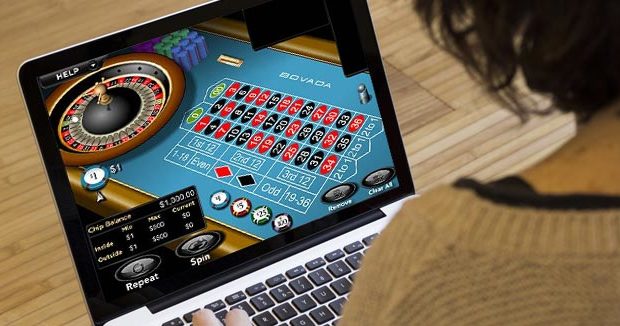
Deposit limits represent the most direct financial controls a player can implement. They restrict the amount of money that can be deposited into a gambling account over a specified period, stopping unplanned spending beyond a set threshold. At Winbeatz Casino, these limits are set voluntarily within the account settings, and any decrease takes effect immediately, while an increase typically requires a cooling-off delay to discourage impulse decisions. The logic is behavioral: separating the decision to top up a balance from the heat of a gaming session reduces regret-driven deposits. Once a cap is reached, the system halts further transactions, forming a hard stop that cannot be overridden without waiting for the selected period to reset. For individuals who have difficulty tracking cumulative spending, deposit limits serve as an automated budget enforcer, mimicking the envelope method of cash management but in a digital environment. This tool is highly efficient because it operates upstream—before money enters the betting ecosystem—rather than requiring a player to exercise restraint during play.
Configuring Limits by Time Frame
The granularity of limit settings plays a key role. Most platforms, including Winbeatz Casino, offer daily, weekly, and monthly deposit cap options. A daily limit works for players who want to control session-level spending, while a monthly cap offers a macro view that aligns with salary cycles and regular expenses. Combining both frames builds a layered reddit.com defense: a daily ceiling blocks heavy single-day outlays, and a monthly ceiling prevents erosion of the overall household budget. When players set these limits, it is wise to base the numbers on discretionary income—the money left after essentials—rather than an optimistic estimate of what might be won. Regulators in Belgium also mandate operators to display deposit totals in real time, helping players to monitor where they stand against their chosen caps. This transparency turns abstract financial boundaries into visible, trackable markers, making it harder to ignore when spending approaches the set limit.
Tapping into External Help Networks
Gambling harm seldom occurs in isolation, and awareness resources go well beyond operator‑provided tools. A robust ecosystem of helplines, counseling services, and online forums exists to provide human connection and professional therapy. These external networks are vital because they address the psychological and social roots of problematic gambling, which technical limits alone cannot resolve. In Belgium, organizations such as the Centrum voor Alcohol- en andere Drugproblemen (CAD) and specialized gambling clinics deliver face‑to‑face and remote therapy. Trained counselors help individuals identify triggers, rebuild financial stability, and repair strained relationships. Winbeatz Casino’s responsible gambling page includes direct links to these services, positioning them not as an afterthought but as essential components of the player protection framework. The anonymity and speed of a phone call or chat session lessen the barrier for someone who may feel too ashamed to schedule an in‑person appointment. Acknowledging when self‑administered tools are insufficient and reaching out to a human support system is a mark of strength, not weakness.
The Belgian Dedicated Gambling Helplines
Belgium supplies two primary confidential telephone lines: 0800 35 555 for Dutch‑speaking callers and 0800 36 555 for French‑speaking individuals. These numbers link to trained operators who are familiar with the local gambling landscape and can guide callers toward appropriate next steps, whether that is self‑exclusion, budget counseling, or longer‑term therapy. Additionally, the websites stopoptijd.be and jouer-moins.be function as comprehensive online portals offering self‑assessment tests, educational material, and direct chat options. These platforms are funded by the Belgian government and carry no commercial affiliation, guaranteeing impartial advice. For players at Winbeatz Casino who encounter these resources through the operator’s site, the transition is effortless: the numbers and links are presented prominently, and the same information is echoed in transaction confirmation emails. The dual‑language approach mirrors Belgium’s commitment to accessibility, making sure that language is by no means a barrier to receiving help.
Establishing a Personal Safety Net from Awareness Resources
The entire power of awareness resources emerges only when they are combined into a customized defense system. A player who defines a monthly deposit limit but ignores session timers still faces time overuse; another who activates reality checks but skips self‑exclusion when needed leaves a gap. Building a personal safety net involves triaging the existing tools based on specific vulnerability points. The process can begin with a self‑assessment to determine the most urgent risk factors, accompanied by aligning those with particular interventions: time‑based tools for losing track of control of hours, deposit caps for overspending, and cooling‑off for impulsive gambling after a stressful day. Contact details for helplines should be kept in the phone together with the profile identifiers needed for quick exclusion. Winbeatz Casino’s dashboard even allows players to set permanent loss limits that extend across multiple sessions, an sophisticated technique for those who seek a generous safety margin. Revisiting the configuration monthly—as circumstances and income shift—keeps the safety net matched with daily life. When utilized this way, the toolbox ends to be a collection of compliance features and becomes an living, adjustable shield that safeguards both the bankroll and the well‑being of the player.
The Objective Behind Gambling Awareness Resources
Gambling awareness resources represent no punitive measures intended to restrict enjoyment; they are engineered guardrails that keep entertainment within healthy boundaries. In Belgium, the legal framework enforced by the Gaming Commission mandates that all licensed operators, including Winbeatz Casino, embed these tools directly into the player journey. Their collective role is to mitigate the cognitive distortions that gambling can trigger—illusions of control, chasing losses, or time dissociation. By pre-committing to limits, a player shifts the burden of in-the-moment self-control onto a technical system. A deposit limit, for example, severs the ability to impulsively reload a wallet after a loss. A session timer restores conscious awareness back to clock time, breaking the trance of continuous play. Each resource forms a distinct layer of protection, and when used together they create an environment in which gambling remains a leisure choice, not a compulsion. Recognizing this protective design constitutes the first step toward leveraging the full suite of available tools.
How Winbeatz Casino Integrates Player Protection Tools
Winbeatz Casino consolidates all safe gambling tools into a unified, clearly labeled dashboard accessible from the main account menu. The design simplifies decision-making by presenting deposit limits, session timers, reality check preferences, and self‑exclusion options as a unified checklist rather than dispersed features. Each tool is accompanied by a brief explainer that describes its function in everyday language—no legal jargon—assisting players make informed choices without leaving the page. The platform also displays loss and deposit totals visibly in the cashier section, boosting moment‑to‑moment financial awareness. A direct, one‑click link to Belgium’s national helpline and the EPIS registration portal is positioned at the bottom of the responsible gambling page, ensuring that escalation to external support requires no searching. Furthermore, Winbeatz Casino has implemented required cool‑off periods for any limit increase requests, in line with best practices recommended by the Belgian Gaming Commission. This integration transforms a list of abstract obligations into a genuinely user‑friendly safety hub, where every protective measure is equally easy to locate and activate.
Controlling Play Duration with Session Timers
Time perception distortion is one of gambling’s most harmful effects. Bright visuals, auditory feedback, and rapid game cycles can shorten the perception of hours into what feels like minutes. Session timers effectively address this phenomenon by permitting players to pre-set a maximum duration for any single gambling session. Once activated, the system monitors continuous logged-in time; when the ceiling is hit, the player is automatically logged out or blocked from further play until a new session begins later. The benefit is not merely forced interruption, but the restoration of time awareness. A session timer injects a predictable endpoint into the activity, echoing the natural boundaries present in other forms of entertainment, such as a movie runtime or a sports match. For users at Winbeatz Casino, session limits align with reality check pop-ups to create a dual-layer time management system. Setting a timer requires nothing more than navigating to the responsible gambling dashboard and selecting a realistic interval, ideally one that accommodates other daily commitments.
Understanding Reality Check Messages

Reality checks are temporary messages that appear at set intervals during a gambling session, displaying factual data about the current session’s spent time, bets made, and net result. They are neither warnings nor evaluations; their sole function is to disrupt the illusion of uninterrupted play by reintroducing objective metrics. Because the brain can lose track of cumulative losses when the flow of play is unbroken, the reality check functions as a cognitive reset. A player who views “You have been gambling for 1 hour, you staked €150, your net position is -€30” is momentarily pulled out of the unthinking mode and granted the opportunity to re‑evaluate. At Belgian regulated casinos such as Winbeatz, reality checks are required every 60 minutes by preset, but players can reduce the interval to 30 or 45 minutes for higher frequency. The key step is not just reading the pop‑up, but deliberately deciding to respond on the facts—pausing, ending the session, or changing strategy—rather than automatically dismissing it. Over time, this practice builds stronger self‑monitoring habits.
Personal Assessment Tools and Awareness Tests
Self‑assessment questionnaires are the diagnostic mirrors of the responsible gambling toolkit. They comprise a range of carefully crafted statements that encourage players to reflect on their behavior habits, emotional state, and the consequences of gambling. Because denial can hide emerging problems, these tests bypass subjective self‑perception by asking concrete questions. A typical test might inquire about chasing losses, lying to family, gambling longer than planned, or experiencing restlessness when trying to cut back. The scoring algorithm then translates responses to a risk category, offering a rough triage: low‑risk behavior, early warning signs, or probable gambling disorder. The value is found in not the score itself but in the moment of honest introspection it forces. Platforms like Winbeatz Casino embed these tests directly into their responsible gambling page, often alongside links to professional help, so that a player who gets a concerning result has an direct, frictionless path to support. Regularly retaking a self‑assessment can track changes over time and act as an early‑warning system.
- Do you often gamble for longer than you initially intended?
- Did you ever borrowed money or sold personal items to finance gambling?
- Are you experiencing anxious or irritable when you try to reduce your gambling time?
- Have caused arguments or tension with family members or colleagues?
- Do you chase losses by returning quickly to recover money you lost previously?
- Has performance at work or in studies deteriorated because of your gambling habits?
- Do you find yourself thinking obsessively about gambling when you are not playing?